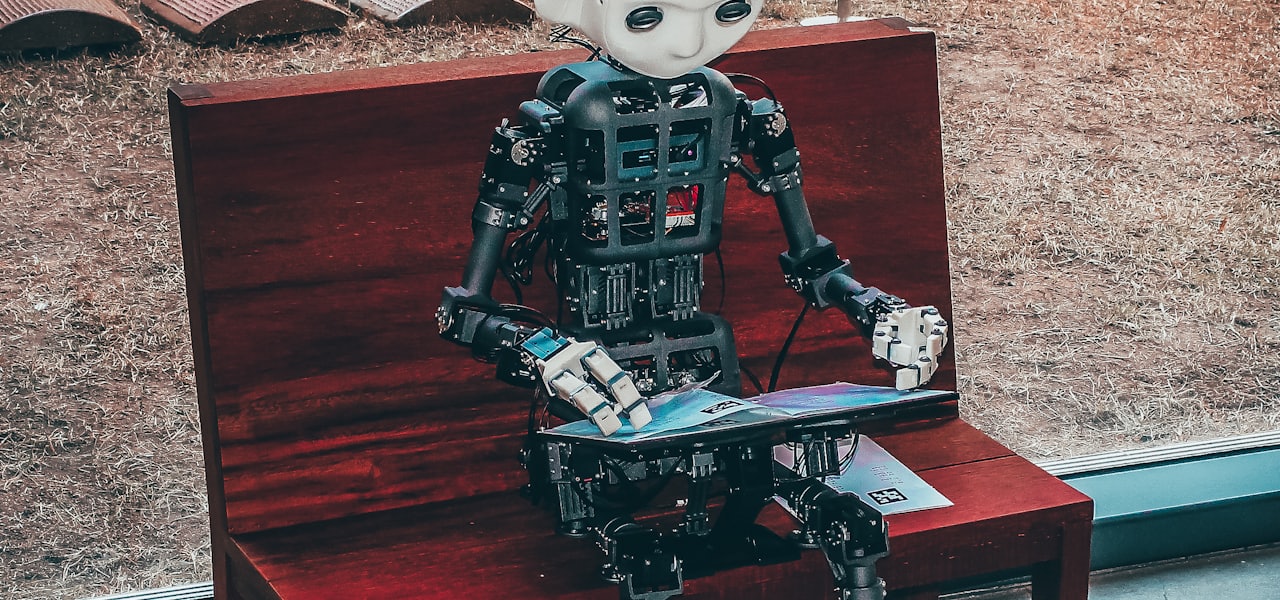
Moses is a statistical machine translation engine that can be used to train statistical models of text translation from a source language to a target language, developed by the University of Edinburgh. Moses then allows new source-language text to be decoded using these models to produce automatic translations in the target language. Training requires a parallel corpus of passages in the two languages, typically manually translated sentence pairs. Moses is free and open-source software, released under the GNU Library Public License (LGPL), and available as source code and binary files for Windows and Linux. Its development is supported mainly by the EuroMatrix project, with funding by the European Commission. Among its features are: A beam search algorithm that quickly finds the highest probability translation within a set of choices Phrase-based translation of short text chunks Handles words with multiple factored representations to enable integrating linguistic and other information (e.g., surface form, lemma and morphology, part-of-speech, word class) Decodes ambiguous forms of a source sentence, represented as a confusion network, to support integrating with upstream tools such as speech recognizers Support for large language models (LMs) such as IRSTLM (an exact LM using memory-mapping) and RandLM (an inexact LM based on Bloom filters)
Huawei Member Center
Huawei Member Center is a benefits app which runs using Huawei Mobile Services. Originally launched in China, Huawei Member Center is now being developed primarily around devices such as P40 Pro and the Nova 7. == Membership Levels == The Huawei Member Center provides rewards in two primary ways, 1) device-specific & promotions and 2) via frequent use of Huawei products and apps, using points to redeem additional benefits. In China, Huawei members are already classified into three levels, the highest being “elite”. Membership level determines the level of perks received, from priority access to the service hotline, new device events & proprietary early-access opportunities. Huawei ran a number of member events in 2019 called "Huawei Member Day" to promote the Member Center including providing tips for the Mate 30 Pro and offering a 50Gb cloud storage upgrade to users. == HMC in China == Huawei Member Center Has seen significant adoption in China and the east, the rewards for use on the app have ranged from free book coupons, discounted travel and exclusive gifts of new devices, such as the Huawei Enjoy Z.
Control-flow diagram
A control-flow diagram (CFD) is a diagram to describe the control flow of a business process, process or review. Control-flow diagrams were developed in the 1950s, and are widely used in multiple engineering disciplines. They are one of the classic business process modeling methodologies, along with flow charts, drakon-charts, data flow diagrams, functional flow block diagram, Gantt charts, PERT diagrams, and IDEF. == Overview == A control-flow diagram can consist of a subdivision to show sequential steps, with if-then-else conditions, repetition, and/or case conditions. Suitably annotated geometrical figures are used to represent operations, data, or equipment, and arrows are used to indicate the sequential flow from one to another. There are several types of control-flow diagrams, for example: Change-control-flow diagram, used in project management Configuration-decision control-flow diagram, used in configuration management Process-control-flow diagram, used in process management Quality-control-flow diagram, used in quality control. In software and systems development, control-flow diagrams can be used in control-flow analysis, data-flow analysis, algorithm analysis, and simulation. Control and data are most applicable for real time and data-driven systems. These flow analyses transform logic and data requirements text into graphic flows which are easier to analyze than the text. PERT, state transition, and transaction diagrams are examples of control-flow diagrams. == Types of control-flow diagrams == === Process-control-flow diagram === A flow diagram can be developed for the process [control system] for each critical activity. Process control is normally a closed cycle in which a sensor. The application determines if the sensor information is within the predetermined (or calculated) data parameters and constraints. The results of this comparison, which controls the critical component. This [feedback] may control the component electronically or may indicate the need for a manual action. This closed-cycle process has many checks and balances to ensure that it stays safe. It may be fully computer controlled and automated, or it may be a hybrid in which only the sensor is automated and the action requires manual intervention. Further, some process control systems may use prior generations of hardware and software, while others are state of the art. === Performance-seeking control-flow diagram === The figure presents an example of a performance-seeking control-flow diagram of the algorithm. The control law consists of estimation, modeling, and optimization processes. In the Kalman filter estimator, the inputs, outputs, and residuals were recorded. At the compact propulsion-system-modeling stage, all the estimated inlet and engine parameters were recorded. In addition to temperatures, pressures, and control positions, such estimated parameters as stall margins, thrust, and drag components were recorded. In the optimization phase, the operating-condition constraints, optimal solution, and linear-programming health-status condition codes were recorded. Finally, the actual commands that were sent to the engine through the DEEC were recorded.
Computer-aided software engineering
Computer-aided software engineering (CASE) is a domain of software tools used to design and implement applications. CASE tools are similar to and are partly inspired by computer-aided design (CAD) tools used for designing hardware products. CASE tools are intended to help develop high-quality, defect-free, and maintainable software. CASE software was often associated with methods for the development of information systems together with automated tools that could be used in the software development process. == History == The Information System Design and Optimization System (ISDOS) project, started in 1968 at the University of Michigan, initiated a great deal of interest in the whole concept of using computer systems to help analysts in the very difficult process of analysing requirements and developing systems. Several papers by Daniel Teichroew fired a whole generation of enthusiasts with the potential of automated systems development. His Problem Statement Language / Problem Statement Analyzer (PSL/PSA) tool was a CASE tool although it predated the term. Another major thread emerged as a logical extension to the data dictionary of a database. By extending the range of metadata held, the attributes of an application could be held within a dictionary and used at runtime. This "active dictionary" became the precursor to the more modern model-driven engineering capability. However, the active dictionary did not provide a graphical representation of any of the metadata. It was the linking of the concept of a dictionary holding analysts' metadata, as derived from the use of an integrated set of techniques, together with the graphical representation of such data that gave rise to the earlier versions of CASE. The next entrant into the market was Excelerator from Index Technology in Cambridge, Mass. While DesignAid ran on Convergent Technologies and later Burroughs Ngen networked microcomputers, Index launched Excelerator on the IBM PC/AT platform. While, at the time of launch, and for several years, the IBM platform did not support networking or a centralized database as did the Convergent Technologies or Burroughs machines, the allure of IBM was strong, and Excelerator came to prominence. Hot on the heels of Excelerator were a rash of offerings from companies such as Knowledgeware (James Martin, Fran Tarkenton and Don Addington), Texas Instrument's CA Gen and Andersen Consulting's FOUNDATION toolset (DESIGN/1, INSTALL/1, FCP). CASE tools were at their peak in the early 1990s. According to the PC Magazine of January 1990, over 100 companies were offering nearly 200 different CASE tools. At the time IBM had proposed AD/Cycle, which was an alliance of software vendors centered on IBM's Software repository using IBM DB2 in mainframe and OS/2: The application development tools can be from several sources: from IBM, from vendors, and from the customers themselves. IBM has entered into relationships with Bachman Information Systems, Index Technology Corporation, and Knowledgeware wherein selected products from these vendors will be marketed through an IBM complementary marketing program to provide offerings that will help to achieve complete life-cycle coverage. With the decline of the mainframe, AD/Cycle and the Big CASE tools died off, opening the market for the mainstream CASE tools of today. Many of the leaders of the CASE market of the early 1990s ended up being purchased by Computer Associates, including IEW, IEF, ADW, Cayenne, and Learmonth & Burchett Management Systems (LBMS). The other trend that led to the evolution of CASE tools was the rise of object-oriented methods and tools. Most of the various tool vendors added some support for object-oriented methods and tools. In addition new products arose that were designed from the bottom up to support the object-oriented approach. Andersen developed its project Eagle as an alternative to Foundation. Several of the thought leaders in object-oriented development each developed their own methodology and CASE tool set: Jacobson, Rumbaugh, Booch, etc. Eventually, these diverse tool sets and methods were consolidated via standards led by the Object Management Group (OMG). The OMG's Unified Modelling Language (UML) is currently widely accepted as the industry standard for object-oriented modeling. == CASE software == === Tools === CASE tools support specific tasks in the software development life-cycle. They can be divided into the following categories: Business and analysis modeling: Graphical modeling tools. E.g., E/R modeling, object modeling, etc. Development: Design and construction phases of the life-cycle. Debugging environments. E.g., IISE LKO. Verification and validation: Analyze code and specifications for correctness, performance, etc. Configuration management: Control the check-in and check-out of repository objects and files. E.g., SCCS, IISE. Metrics and measurement: Analyze code for complexity, modularity (e.g., no "go to's"), performance, etc. Project management: Manage project plans, task assignments, scheduling. Another common way to distinguish CASE tools is the distinction between Upper CASE and Lower CASE. Upper CASE Tools support business and analysis modeling. They support traditional diagrammatic languages such as ER diagrams, Data flow diagram, Structure charts, Decision Trees, Decision tables, etc. Lower CASE Tools support development activities, such as physical design, debugging, construction, testing, component integration, maintenance, and reverse engineering. All other activities span the entire life-cycle and apply equally to upper and lower CASE. === Workbenches === Workbenches integrate two or more CASE tools and support specific software-process activities. Hence they achieve: A homogeneous and consistent interface (presentation integration) Seamless integration of tools and toolchains (control and data integration) An example workbench is Microsoft's Visual Basic programming environment. It incorporates several development tools: a GUI builder, a smart code editor, debugger, etc. Most commercial CASE products tended to be such workbenches that seamlessly integrated two or more tools. Workbenches also can be classified in the same manner as tools; as focusing on Analysis, Development, Verification, etc. as well as being focused on the upper case, lower case, or processes such as configuration management that span the complete life-cycle. === Environments === An environment is a collection of CASE tools or workbenches that attempts to support the complete software process. This contrasts with tools that focus on one specific task or a specific part of the life-cycle. CASE environments are classified by Fuggetta as follows: Toolkits: Loosely coupled collections of tools. These typically build on operating system workbenches such as the Unix Programmer's Workbench or the VMS VAX set. They typically perform integration via piping or some other basic mechanism to share data and pass control. The strength of easy integration is also one of the drawbacks. Simple passing of parameters via technologies such as shell scripting can't provide the kind of sophisticated integration that a common repository database can. Fourth generation: These environments are also known as 4GL standing for fourth generation language environments due to the fact that the early environments were designed around specific languages such as Visual Basic. They were the first environments to provide deep integration of multiple tools. Typically these environments were focused on specific types of applications. For example, user-interface driven applications that did standard atomic transactions to a relational database. Examples are Informix 4GL, and Focus. Language-centered: Environments based on a single often object-oriented language such as the Symbolics Lisp Genera environment or VisualWorks Smalltalk from Parcplace. In these environments all the operating system resources were objects in the object-oriented language. This provides powerful debugging and graphical opportunities but the code developed is mostly limited to the specific language. For this reason, these environments were mostly a niche within CASE. Their use was mostly for prototyping and R&D projects. A common core idea for these environments was the model–view–controller user interface that facilitated keeping multiple presentations of the same design consistent with the underlying model. The MVC architecture was adopted by the other types of CASE environments as well as many of the applications that were built with them. Integrated: These environments are an example of what most IT people tend to think of first when they think of CASE. Environments such as IBM's AD/Cycle, Andersen Consulting's FOUNDATION, the ICL CADES system, and DEC Cohesion. These environments attempt to cover the complete life-cycle from analysis to maintenance and provide an integrated database repository for storing all artifacts of the software pr
CryptoParty
CryptoParty (Crypto-Party) is a grassroots global endeavour to introduce the basics of practical cryptography such as the Tor anonymity network, I2P, Freenet, key signing parties, disk encryption and virtual private networks to the general public. The project primarily consists of a series of free public workshops. == History == As a successor to the Cypherpunks of the 1990s, CryptoParty was conceived in late August 2012 by the Australian journalist Asher Wolf in a Twitter post following the passing of the Cybercrime Legislation Amendment Bill 2011 and the proposal of a two-year data retention law in that country, the Cybercrime Legislation Amendment Bill 2011. The DIY, self-organizing movement immediately went viral, with a dozen autonomous CryptoParties being organized within hours in cities throughout Australia, the US, the UK, and Germany. Many more parties were soon organized or held in Chile, The Netherlands, Hawaii, Asia, etc. Tor usage in Australia itself spiked, and CryptoParty London with 130 attendees—some of whom were veterans of the Occupy London movement—had to be moved from London Hackspace to the Google campus in east London's Tech City. As of mid-October 2012 some 30 CryptoParties have been held globally, some on a continuing basis, and CryptoParties were held on the same day in Reykjavik, Brussels, and Manila. The first draft of the 442-page CryptoParty Handbook (the hard copy of which is available at cost) was pulled together in three days using the book sprint approach, and was released 2012-10-04 under a CC BY-SA license. === Edward Snowden involvement === In May 2014, Wired reported that Edward Snowden, while employed by Dell as an NSA contractor, organized a local CryptoParty at a small hackerspace in Honolulu, Hawaii on December 11, six months before becoming well known for leaking tens of thousands of secret U.S. government documents. During the CryptoParty, Snowden taught 20 Hawaii residents how to encrypt their hard drives and use the Internet anonymously. The event was filmed by Snowden's then-girlfriend, but the video has never been released online. In a follow-up post to the CryptoParty wiki, Snowden pronounced the event a "huge success." == Media response == In 2013, CryptoParty received messages of support from the Electronic Frontier Foundation and (purportedly) AnonyOps, as well as the NSA whistleblower Thomas Drake, WikiLeaks central editor Heather Marsh, and Wired reporter Quinn Norton. Eric Hughes, the author of A Cypherpunk's Manifesto nearly two decades before, delivered the keynote address, Putting the Personal Back in Personal Computers, at the Amsterdam CryptoParty on 2012-09-27. Marcin de Kaminski, founding member of Piratbyrån which in turn founded The Pirate Bay, regarded CryptoParty as the most important civic project in cryptography in 2012, and Cory Doctorow has characterized a CryptoParty as being "like a Tupperware party for learning crypto." Der Spiegel in December 2014 mentioned "crypto parties" in the wake of the Edward Snowden leaks in an article about the NSA.
Image-based modeling and rendering
In computer graphics and computer vision, image-based modeling and rendering (IBMR) methods rely on a set of two-dimensional images of a scene to generate a three-dimensional model and then render some novel views of this scene. The traditional approach of computer graphics has been used to create a geometric model in 3D and try to reproject it onto a two-dimensional image. Computer vision, conversely, is mostly focused on detecting, grouping, and extracting features (edges, faces, etc.) present in a given picture and then trying to interpret them as three-dimensional clues. Image-based modeling and rendering allows the use of multiple two-dimensional images in order to generate directly novel two-dimensional images, skipping the manual modeling stage. == Light modeling == Instead of considering only the physical model of a solid, IBMR methods usually focus more on light modeling. The fundamental concept behind IBMR is the plenoptic illumination function which is a parametrisation of the light field. The plenoptic function describes the light rays contained in a given volume. It can be represented with seven dimensions: a ray is defined by its position ( x , y , z ) {\displaystyle (x,y,z)} , its orientation ( θ , ϕ ) {\displaystyle (\theta ,\phi )} , its wavelength ( λ ) {\displaystyle (\lambda )} and its time ( t ) {\displaystyle (t)} : P ( x , y , z , θ , ϕ , λ , t ) {\displaystyle P(x,y,z,\theta ,\phi ,\lambda ,t)} . IBMR methods try to approximate the plenoptic function to render a novel set of two-dimensional images from another. Given the high dimensionality of this function, practical methods place constraints on the parameters in order to reduce this number (typically to 2 to 4). == IBMR methods and algorithms == View morphing generates a transition between images Panoramic imaging renders panoramas using image mosaics of individual still images Lumigraph relies on a dense sampling of a scene Space carving generates a 3D model based on a photo-consistency check
Philco computers
Philco was one of the pioneers of transistorized computers, also known as second-generation computers. After the company developed the surface-barrier transistor, which was much faster than previous point-contact types, it was awarded contracts for military and government computers. Commercialized derivatives of some of these designs became successful business and scientific computers. The TRANSAC (Transistor Automatic Computer) Model S-1000 was released as a scientific computer. The TRANSAC S-2000 mainframe computer system was first produced in 1958, and a family of compatible machines, with increasing performance, was released over the next several years. However, the mainframe computer market was dominated by IBM. Other companies could not deploy resources for development, customer support and marketing on the scale that IBM could afford, making competition in this segment difficult after the introduction of the IBM 360 family. Philco went bankrupt and was purchased in 1961 by Ford Motor Company, but the computer division carried on until the Philco division of Ford exited the computer business in 1963. The Ford company maintained one Philco mainframe in use until 1981. == The surface-barrier transistor == The surface-barrier transistor developed by Philco in 1953 had a much higher frequency response than the original point-contact transistors. The transistor was made of a thin crystal of germanium, which was electrolytically etched with pits on either side forming a very thin base region, on the order of 5 micrometers. Philco's process for etching was United States patent number 2,885,571. Philco surface-barrier transistors were used in TX-0, and in early models of what would become the DEC PDP product line. Although relatively fast, the small size of the devices limited their power to circuits operating at a few tens of milliwatts. == Military and government == Between 1955 and 1957, Philco built transistor computers for use in aircraft, models C-1000, C-1100, and C-1102, intended for airborne real-time applications. By 1957, the C-1102 had been used by a civilian sector customer. The BASICPAC AN/TYK 6V (first delivery in 1961), COMPAC AN/TYK 4V (not completed), and LOGICPAC systems were built for the US Army as transportable computer systems for use with their Fieldata concept of integrated information management. BASICPAC was a transistorized computer with up to 28,672 words of 38-bit core memory (including sign and parity), available in several configurations from a minimum system, to a truck-borne mobile version, to a fully expanded system. Basic clock periods was 1 microsecond (which gives a clock rate of 1 MHz), with 12 microsecond memory access and a fixed-point multiplication taking 242 microseconds. Input/output was by paper tape reader and punch, or through a teletypewriter. With additional hardware, magnetic tape storage was also available, with up to seven I/O devices. The instruction set had 31 basic operation codes and nine opcodes for I/O === CXPQ === Philco was contracted by the US Navy to build the CXPQ computer. One model was completed and installed at the David Taylor Model Basin. This design was later adapted to become the commercial TRANSAC S-2000. Only one CXPQ was built. The CXPQ is a 48-bit transistorized computer. === SOLO === In 1955, the National Security Agency through the US Navy contracted with Philco to produce a computer suitable for use as a workstation, with an architecture based on the vacuum-tube computer system called Atlas II already in use at the NSA, and similar to the commercial UNIVAC 1103. At the time, Philco was the largest producer of surface barrier transistors, which were the only type available with the speed and quantities required for a computer. The SOLO prototype was delivered in 1958, but required extensive debugging at NSA. Difficulties were encountered with core memory and power supplies. SOLO used paper tape and teleprinter machines for input and output. SOLO cost about $1 million US, and contained 8,000 transistors. While the system was extensively used for training, testing, research and development, no additional units were ordered. SOLO was removed from active service in 1963. The design of the SOLO became commercialized as Philco's TRANSAC Model S-1000. == Commercial == === S-1000 === The TRANSAC S-1000 was a scientific computer with a 36-bit word length and 4096 words of core memory. It was packaged in a container about the size of a large office desk, and used only 1.2 kilowatts, much less than vacuum-tube-based computers of similar capacity. In a 1961 survey, about 15 S-1000 computer installations had been identified. It weighed about 1,650 pounds (750 kg). === S-2000 === The TRANSAC S-2000 was a large mainframe system intended for both business and scientific work. It had a 48-bit word length and supported calculations in fixed point, floating point and binary-coded decimal formats. The original S-2000 "TRANSAC" (Transistor Automatic Computer) released in 1958 was later designated Model 210; it was used internally at Philco. Similar to the Control Data Corporation Model 1604, it was a 48-bit fully transistorized computer. Three succeeding models were released in the series, all compatible with the software of the original model. The Model 211 was introduced in 1960, using micro-alloy diffused field-effect transistors, requiring significant redesign of circuits compared to the original. The TRANSAC S-2000/Philco 210/211 weighed about 2,000 pounds (910 kg). By 1964, eighteen Model 210, eighteen Model 211 and seven Model 212 systems had been sold. After Philco was purchased by Ford Motor Company, the Model 212 was introduced in 1962 and released in 1963. It had 65,535 words of 48-bit memory. Initially made with 6-microsecond core memory, it had better performance than the IBM 7094 transistor computer. It was later upgraded in 1964 to 2-microsecond core memory, which gave the machine floating-point performance greater than the IBM 7030 Stretch computer. A Model 213 was announced in 1964 but never built. By that time competition from IBM had made the Philco computer operations no longer profitable for Ford, and the division was closed down. The Model 212 could carry out a floating-point multiplication in 22 microseconds. Each word contained two 24-bit instructions with 16 bits of address information and eight bits for the opcode. There were 225 different valid opcodes in the Model 212; invalid opcodes were detected and halted the machine. The CPU had an accumulator register of 48 bits, three general-purpose registers of 24 bits, and 32 index registers of 15 bits. Main memory size ranged from 4K words to 64K words. Only the first model had a magnetic drum memory; later editions used tape drives. The Model 212 weighed about 6,500 pounds (3.3 short tons; 2.9 t). Software for the S-2000 initially consisted of TAC (Translator-Assembler-Compiler), and ALTAC, a FORTRAN II-like language with some differences from the IBM 704 FORTRAN implementation. A COBOL compiler was also available, targeted at business applications. The Philco 2400 was the input/output system for the S-2000. Operations such as reading cards or printing were carried out through magnetic tapes, thereby offloading the S-2000 from relatively slow input/output processing. The 2400 had a 24-bit word length and could be supplied with 4K to 32K characters (1K to 8K words) of core memory, rated at 3-microsecond cycle time. The instruction set was aimed at character I/O use. The idea of base registers, implemented in Philco computers, influenced the design of IBM/360. The last Philco TRANSAC S-2000 Model 212 was taken out of service in December 1981, after 19 years of service at Ford.